Sudan
Written by: Zayd Rahman
Summary:
In a world divided by imaginary borders and carefully drawn country lines meant to create meaningful separation between populations, a simple reality holds true: our shared humanity. Still, in the midst of countless international conflicts, we, the spectators, witness an obvious lack of empathy, rooted in a complete disregard for the individuality and dignity of human life. It’s really easy to see this when a new dispute between countries, coupled with a desperate appeal for donations to humanitarian aids seems to pop up every month now, topping news headlines, infecting ads on social media, etc.
But, a few keen observers who religiously follow global injustices may start to notice one calamity in general that is yet to be broadcast as the continued top headliner of the political journalist industry, yet to be a conflict mentioned by know-it-all political analysts on Instagram, and yet to be talked about as much as any other tragedy in our present-day world. Now, ignoring the reasons that this might be the case, which, for the record, likely is due to a racial and ethnic bias in the U.S, it’s important to bring awareness to the humanitarian catastrophe in Sudan, sparking from the civil war between two military factions in the region: the Sudanese Armed Forces (SAF) and the Rapid Support Forces (RSF). According to the United Nations, this conflict has created one of society’s worst humanitarian crises, displacing millions of unarmed civilians and leaving entire regions without reliable access to food, healthcare, or clean water. Putting aside Sudan’s lack of shared eyes, as it stands today, it remains crucial to address the scale and consequences of the country’s collapse.
Analysis:
The Sudanese War is often attributed to a political fallout in the aftermath of the ousting of long-time dictator Omar al-Bashir in 2019. Although this is not inaccurate, it is clearly far from being the whole truth and is insufficient in describing the crisis in Sudan. According to BBC News, following Bashir's overthrow, there began a struggle for power among military leaders who never intended to share it with civilians. However, what started as a political scuffle strictly within the corridors of politics has directly entered the streets and homes in Sudan, where lives are being lost within a raging war.
As the war continued, the workaday climate of Sudan was effectively torn apart. Doctors Without Borders describes the looting or bombing of hospitals, threats or killing of doctors, and blocking of supply lines. This is, simply put, the targeting of areas that are supposed to keep people alive. Reuters has found evidence that war crimes have been committed by both the SAF and the RSF, and that there has been indiscriminate firing on residential areas and the blocking of humanitarian aid. What matters here is how these actions are understood under international law.
For those watching from a distance, the truth of the war has not been found in the headlines or news broadcasts, but surprisingly on social networking sites. Instagram videos depictingcivilians being run over by military tanks, posts on X discussing the lack of medicine from MSF hospitals in Khartoum, and influencers on TikTok urging their viewers to donate and spread the word have been the main way of connecting the conflict to individuals. Mobile phone videos of bombed-out apartment buildings, children covered in blood carried through streets clouded by dust, and unarmed civilians executed in the middle of the day are common views on the Internet. Though not every video can be authenticated, such as a viral satellite image once believed to show a mass execution site, later revealed to be a water pool used by animals, enough have been confirmed by journalists to make it impossible to ignore. Human Rights Watch later confirmed this, analyzing and geolocating dozens of photos and videos posted online to verify attacks on civilians, and a United Nations fact-finding mission has also cited online footage showing executions and other abuses. Enough has been confirmed to make one disturbing fact abundantly clear: the warfare in Sudan has not just caught civilians in the crossfire but actually has targeted them. The outrage has not been sufficient.
There have always been hold-ups in the ceasefire negotiations. There is no accountability in place at all. Their violence continues, not because the world is unaware, but because that awareness has not translated into urgency.
Analysis 2: What happens next?
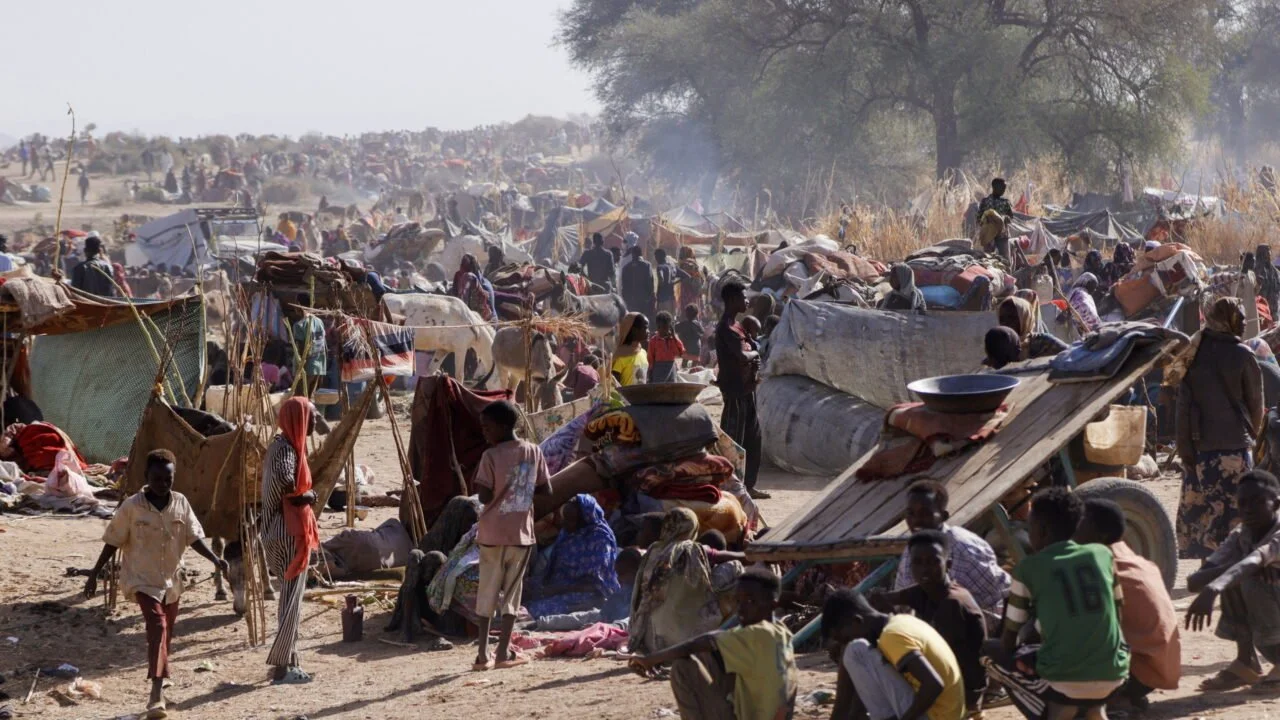
Headlines may suggest otherwise, but the fallout from Sudan's collapse is by no means contained. The UN Office for the Coordination of Humanitarian Affairs estimates that there are over eight million people displaced and hundreds of thousands streaming into and across borders into neighboring countries like Chad, South Sudan, and Egypt. However, these nations are already fragile in their poverty, with their resources stretched to a breaking point. Entire regions are being called upon to bear a humanitarian blow they are poorly equipped to take.
The economic damage, if anything, is equally as bad. It is in light of this that The New York Times underlines how the collapse of Sudan's agricultural industry is fueling food insecurity across East Africa, pushing millions toward famine. Unharvested crops, collapsing markets, broken supply chains-all while intense fighting continues. Hunger quickly became another weapon of war, but one that is without a formal declaration.
More politically, an extended period of inactivity can foreshadow major change. Nonetheless, this is not a story of ignorance; it’s a story of complicity. The government of Sudan has actually sued the United Arab Emirates before the International Court of Justice, charging that it was complicit in genocide because it was providing money, arms, and politics to the RSF that have been accused of massive violence against the non-Arab group of the Masalit people in West Darfur. Research conducted by think tanks and human rights organizations has also placed the UAE high among the states that have most heavily contributed to the Sudanese conflict and that have been accused of funding the RSF despite denying the charges. It throws the perception of the universality of the application of humanitarian law into question when powerful states can be reasonably accused of funding the very same group that appears to be involved in the ethnic cleansing of minorities with no real consequence. An official with the United Nations World Food Programme called Sudan’s crisis “the worst humanitarian crisis in the world” in an address given in April of 2025. The Sudanese crisis affected almost 25 million people who “suffered from ‘acute hunger,’ while over 12 million had been ‘forcibly displaced,’ with at least 20,000 deaths. Without sustained pressure and accountability, says Al Jazeera, the principle of international humanitarian law loses teeth. When mass displacement, ethnic violence, and civilian killings do not provoke a decisive response, it reinforces the sense that some crises (and, by extension, some lives) are easier to ignore than others. Accountability, if it has any meaning at all, has to go not only to military and RSF commanders in the Sudanese army but to the external supporters allegedly providing funding and weaponry as well as to major countries that continue to protect them politically.
If Sudan is treated as a peripheral tragedy, the costs will deepen. Displacement becomes permanent, hunger hardens into famine, and instability ripples outward. The world may wake up EVENTUALLY, but the price will come in far higher than it needs to be. The cases before the International Court of Justice, the investigations by the UN, and the targeted sanctions imposed on those leading or bankrolling the atrocities, as imperfect as they may be, at least mean that the international community has the tools which could be used, were there the will to act.
How Can You Help?
International Rescue Committee (IRC) – Emergency healthcare, clean water, and refugee support
Visit: https://www.rescue.org
Click “Donate”
Choose an amount
Funds directly support Sudan emergency response efforts
Doctors Without Borders (MSF) – Medical aid in active conflict zones
Select “Donate”
Support trauma care and emergency medical services on the ground